

The Learning Labs
City becomes classroom: students create real festivals with local artisans.
Experiential programmes where a city becomes the classroom. Students leave the lecture hall, work alongside artists, artisans and communities, and finish by making a real public festival.
Programme 01 · For schools
Kalakar City Lab
A 9 day programme for high-school students: research your own city’s culture, history, crafts and communities, then curate a one-day festival for your peers. Built in Agra, the framework adapts to any city.
01
Week 1 — Prepare
Digital sessions before arrival cover the city's history, design, architecture, storytelling and cultural landscape, preparing students for what they'll encounter on the ground.
02
Week 2 — Discover
Heritage walks, conversations with artists and craftspeople, design observation, storytelling sessions and community engagement — with Kala Kutir as the students' studio.
03
Week 3 — Create & Celebrate
Students shift from learners to creators, designing and producing a one-day festival for fellow students, teachers, families and the local community.
Programme 02 · Universities & gap-year
Kalakar Immersion Lab
A multi-city residency for MBA, design and gap-year students — learning marketing, culture and community directly from artists and cultural entrepreneurs. The one-month format runs across Panjim, Agra and Kullu after a week of campus preparation; the seven-month format adds Santiniketan and a deeper immersion in each city.
01
Campus preparation
One to two weeks of marketing, branding, consumer behaviour, cultural entrepreneurship, storytelling and experience design. Students form interdisciplinary teams and begin their research.
02
Three cities, three immersions
Panjim for tourism and the creative economy, Agra for heritage and craft, Kullu for nature and rural artisans — each city ending in a mini-festival made with the people students meet.
03
The Kalakar Festival
Students become creators — conceptualising and producing a public festival that celebrates the artists and communities they worked with. Designed by students, with artists, for the community.
Programme 03 · Universities
Agra Arts Festival Co-Creation Lab
Two weeks of digital preparation, then two weeks in Agra co-creating the Agra Arts Festival alongside local artists, artisans and communities. Students work in interdisciplinary teams — outreach, storytelling, experience design, curation, production, finance and hospitality — around one challenge: how do we reimagine Agra beyond the Taj Mahal while creating real opportunities for its artists and communities?
01
Prepare & read the city
Online sessions on Agra’s history, artists and neighbourhoods set teams and roles. Students then arrive and experience the city as researchers — walks, markets, food, craft, everyday life — documenting the stories that could shape the festival.
02
Research, prototype & build
Meeting artists and communities, turning research into festival ideas, and testing prototypes for workshops, performances, walks and installations while working on programming, budgets and audience journeys.
03
Activate & the festival
The festival goes public — content, posters, PR, partnerships and pop-up pre-events — leading to a two-day, student-produced cultural festival in Agra, closing with a day of collective reflection.
Custom & university immersion
Shorter and longer formats built with schools, universities and cultural institutions — around design, culture, place and creative practice. Semester-abroad, study tours and corporate learning included.
Who it’s for
School students, MBA and design students, gap-year and semester-abroad groups, and design or humanities departments looking for fieldwork that isn’t a case study.
What students build
Design thinking, cultural research, storytelling, event curation, communication, leadership and teamwork — plus a real public festival with their name on it. Aligned to UNESCO SDG 11.
Custom & university immersion
Shorter and longer formats built with schools, universities and cultural institutions — around design, culture, place and creative practice. Semester-abroad, study tours and corporate learning included.
Who it’s for
School students, MBA and design students, gap-year and semester-abroad groups, and design or humanities departments looking for fieldwork that isn’t a case study.
What students build
Design thinking, cultural research, storytelling, event curation, communication, leadership and teamwork — plus a real public festival with their name on it. Aligned to UNESCO SDG 11.
Our Philosophy
What Kala Sangam believes about culture and place.
Bring a Lab to your school, university or city
We design programmes with schools, universities and cultural institutions — turning a city into a classroom, built around your goals. Not sure which format fits? Message us and we’ll shape the cities, the artists and the outcome around you.
Kala Kutir
Where the Labs are based
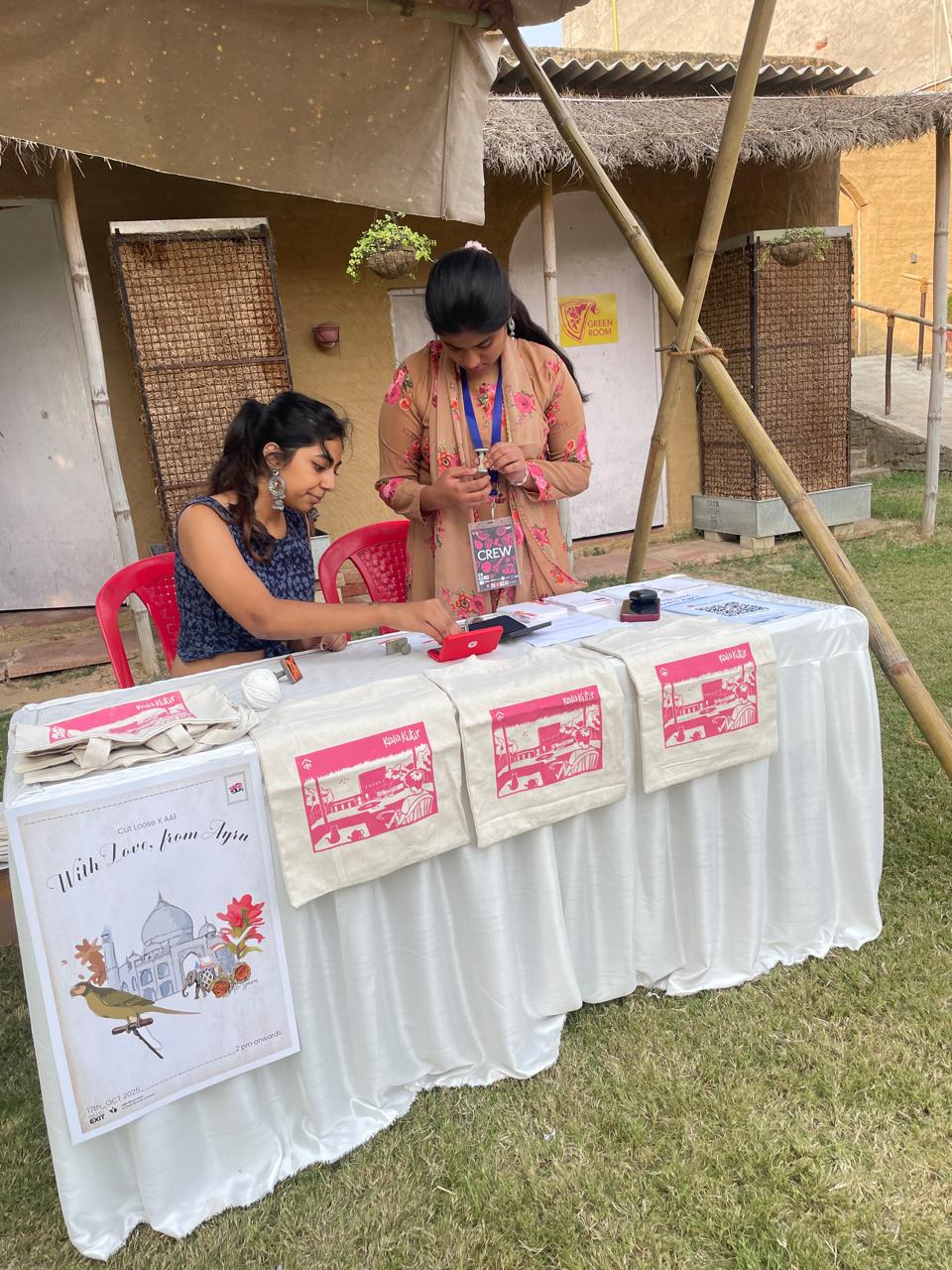
The Learning Labs are run from Kala Kutir, Kala Sangam’s studio and cultural space in Agra.
- Call Us: +91 90686 42111
- Email: kalasangamculturalpvtltd@gmail.com
- Kala Kutir, near 24 MLD STP, Budhana Gaon, near Dhandhupura