
Conversations That Stayed: Dialogues and Film Screenings at Taj ke Saat Rang
 Creating Space for Listening, Reflection, and Shared Understanding
 Creating Space for Listening, Reflection, and Shared Understanding
Not everything at Taj ke Saat Rang happened on stage.
Some of the most important moments unfolded in conversation.
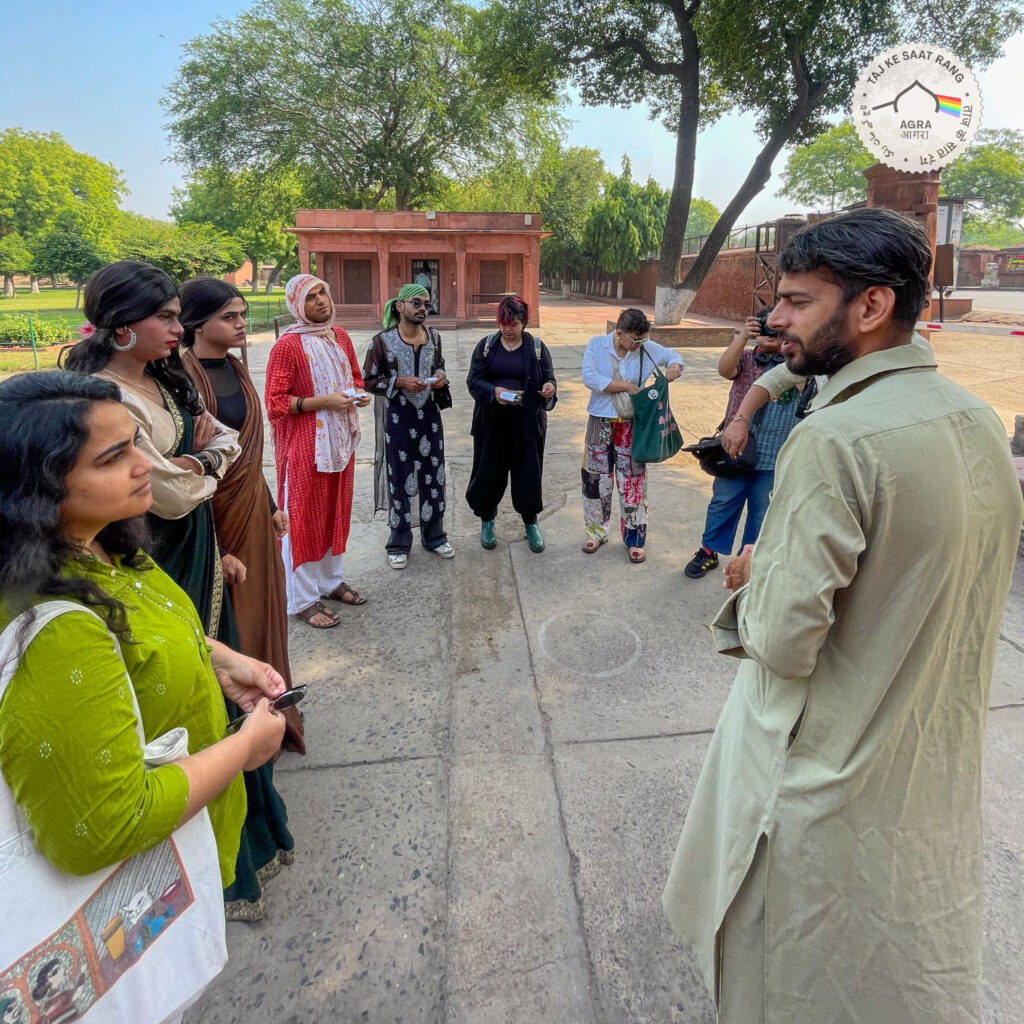
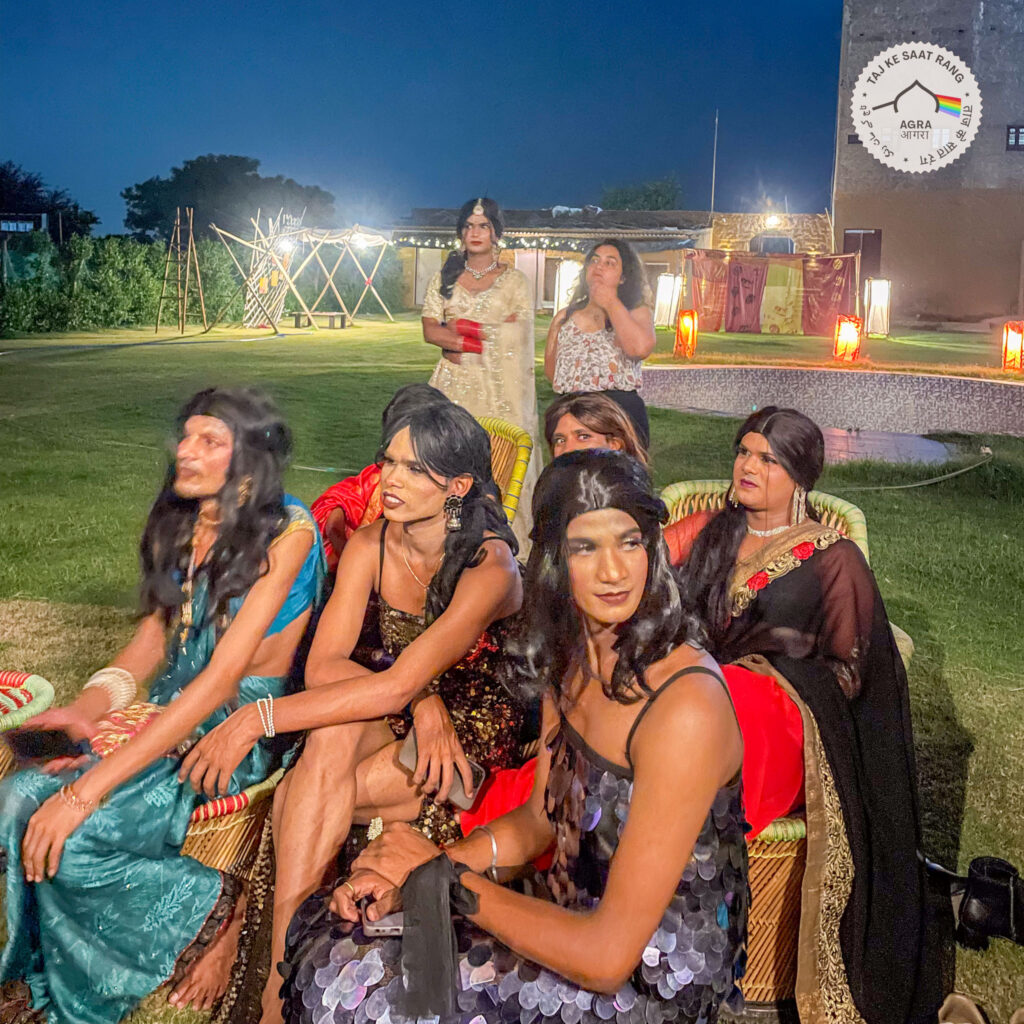
Last year, alongside performances and the Queer Heritage Walk, we held a series of open talks and film screenings—creating space not just for expression, but for listening, questioning, and reflection.
In a city like Agra, where conversations around queerness are still emerging in public spaces, these moments became essential.
They slowed things down.
They allowed people to sit with ideas.
To engage—not just as spectators, but as participants.
The Role of Dialogue in Queer Cultural Spaces
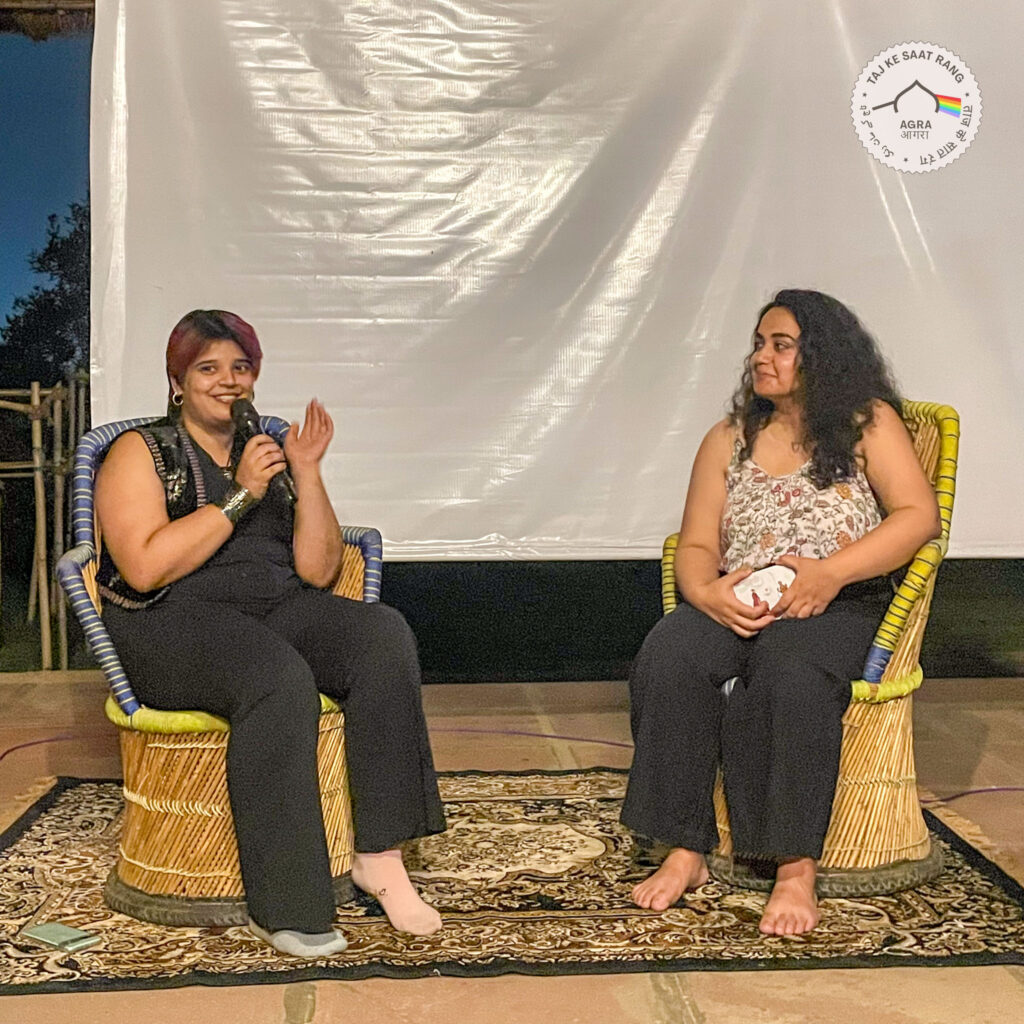 The talk we hosted was not a formal panel in the conventional sense.
It was an open, evolving conversation.
A space where questions could exist without immediate answers.
Where lived experiences carried as much weight as theory.
Where people could speak, hesitate, disagree, and still feel held.
The discussion moved across themes:
– What does it mean to be queer in a tier-II city?
– How do people navigate identity within family and public life?
– What forms of resistance exist beyond protest?
– How can joy, art, and community become tools for survival?
What made the conversation powerful was not just what was said—but who was present.
Artists, students, locals, travellers, allies.
People from different backgrounds, sitting in the same space, engaging with questions that are often kept private.
Film as Reflection: Stories That Stay
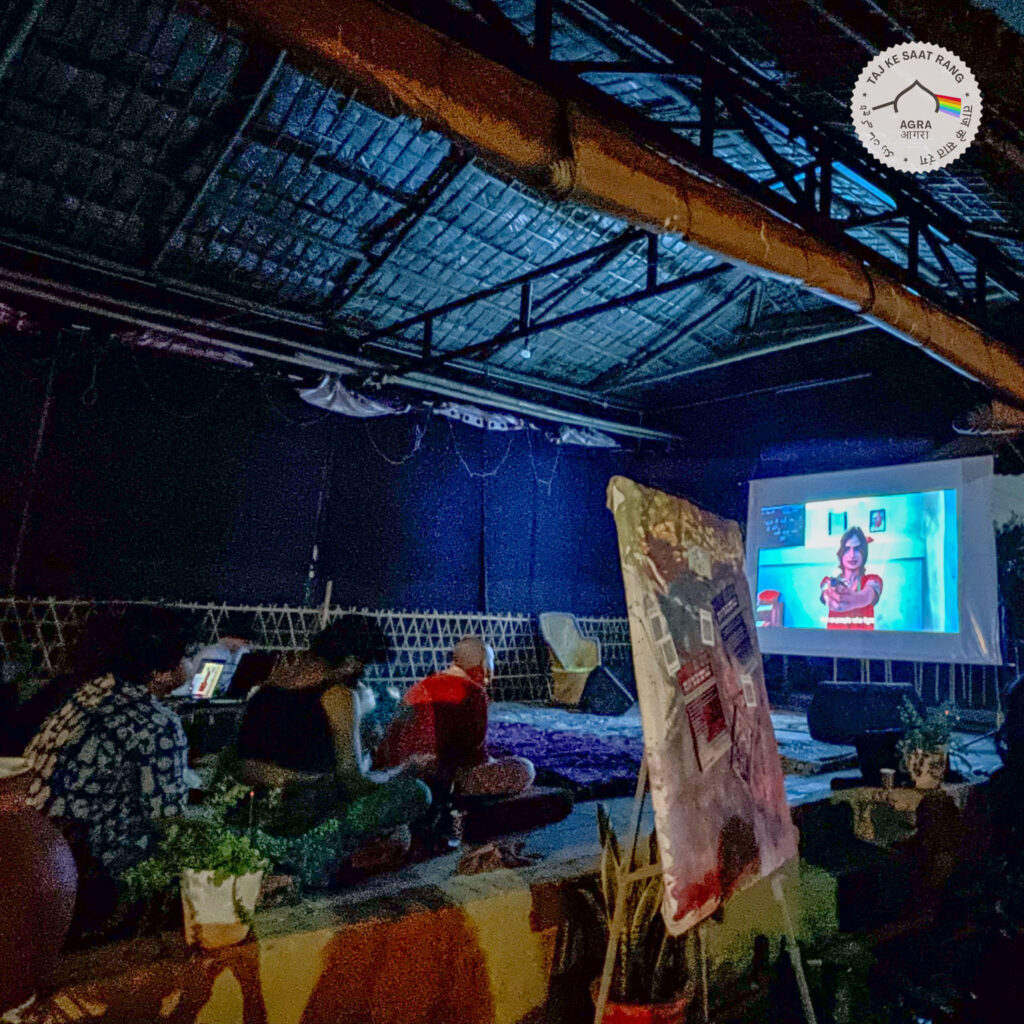
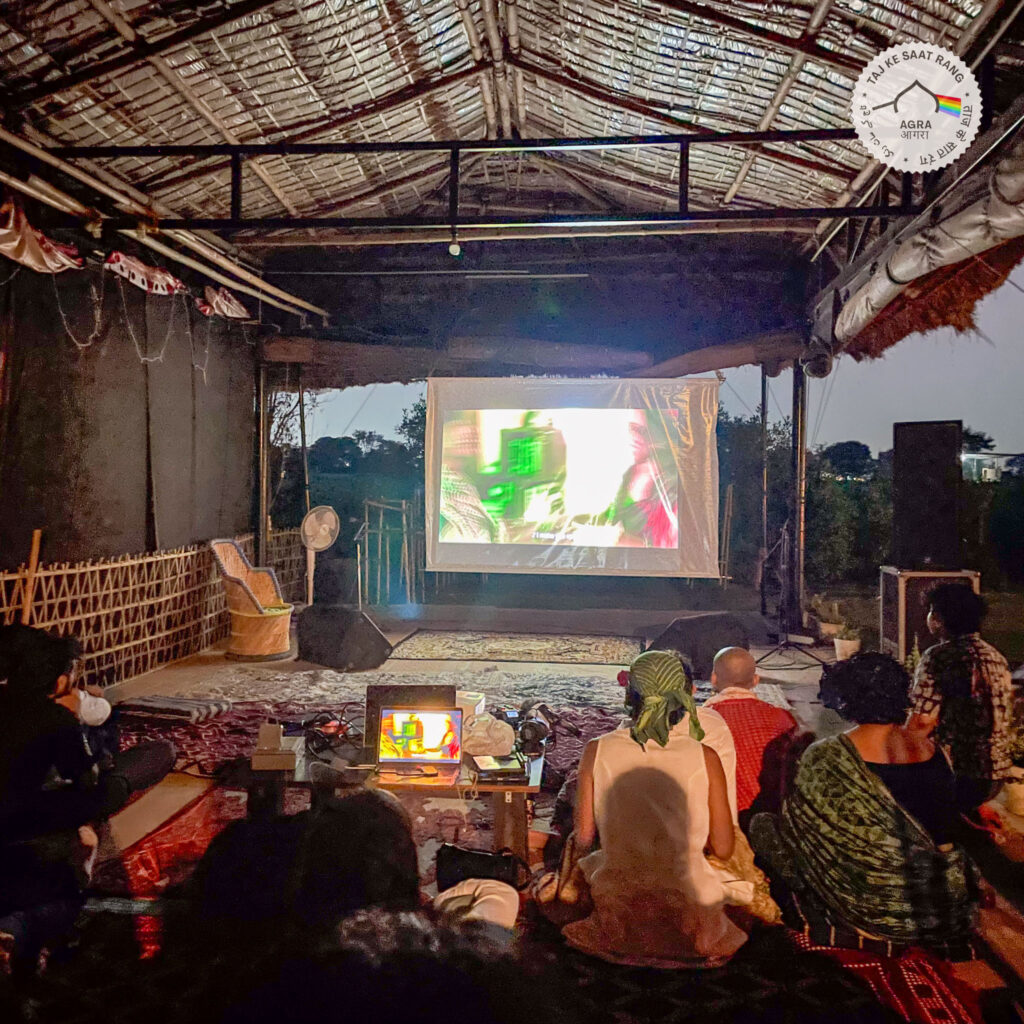
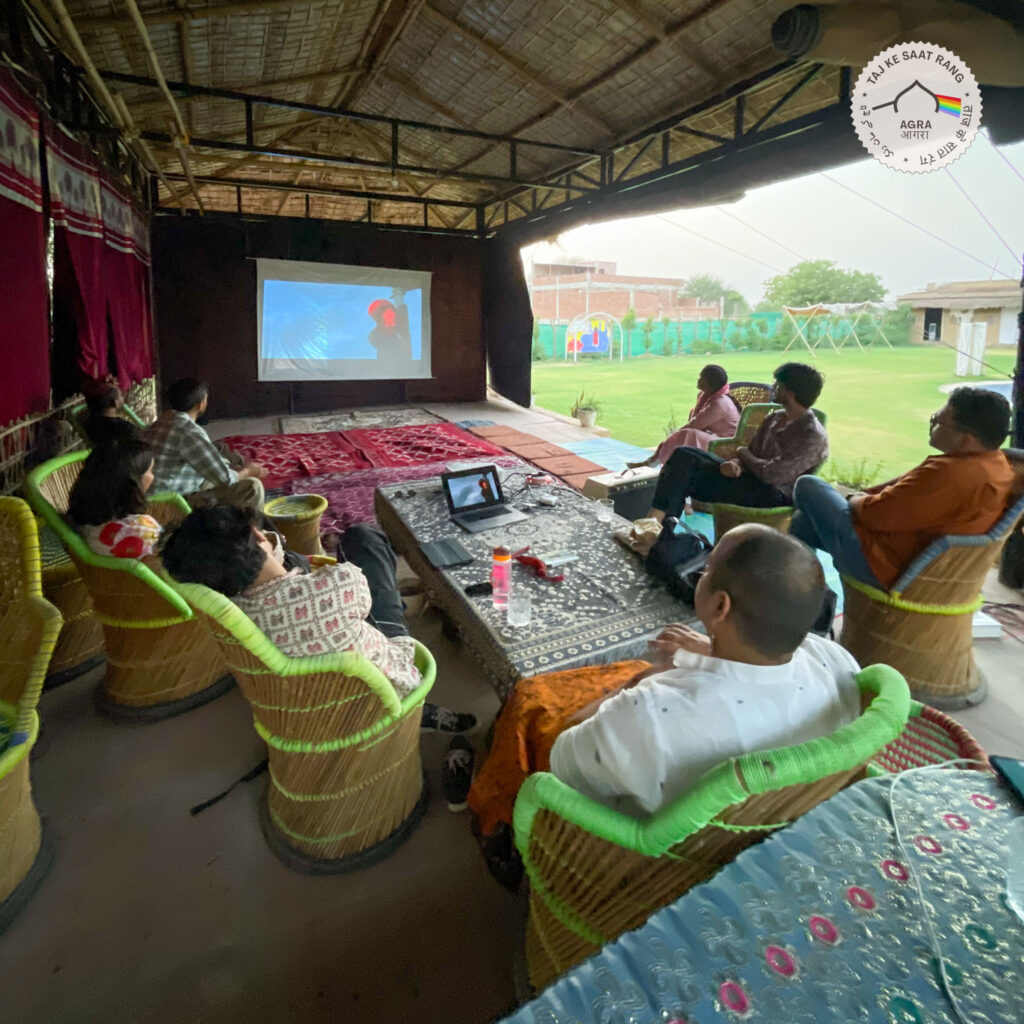 Alongside the talks, we screened two films:
– Don’t Interrupt Me While I Dance
– How Much Space Does a Firefly Take
These films did not attempt to explain queerness.
They allowed it to be felt.
Through movement, silence, intimacy, and everyday moments, they opened up emotional landscapes that are often difficult to articulate in words.
For many in the audience, the screenings became a point of quiet connection.
A way of seeing experiences that resonated—sometimes directly, sometimes unexpectedly.
Watching Together, Feeling Together
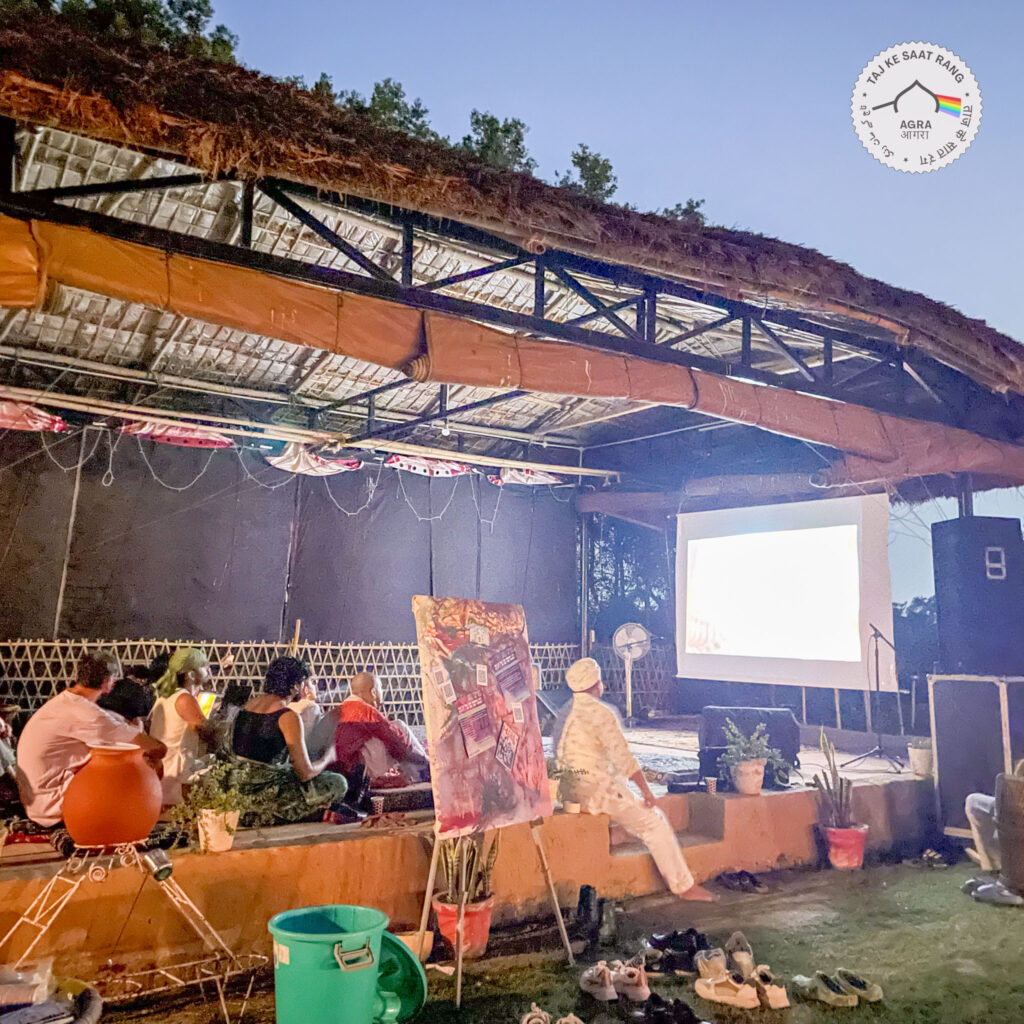 There is something powerful about watching films in a shared space.
Reactions are subtle.
A pause.
A shift in attention.
A silence that lingers a little longer than usual.
In that moment, the room becomes collective.
People are not just consuming a story—they are sitting with it together.
The screenings at Taj ke Saat Rang created this shared emotional space.
They allowed participants to engage with queerness not as a concept, but as lived experience—messy, intimate, unresolved.
Beyond Representation
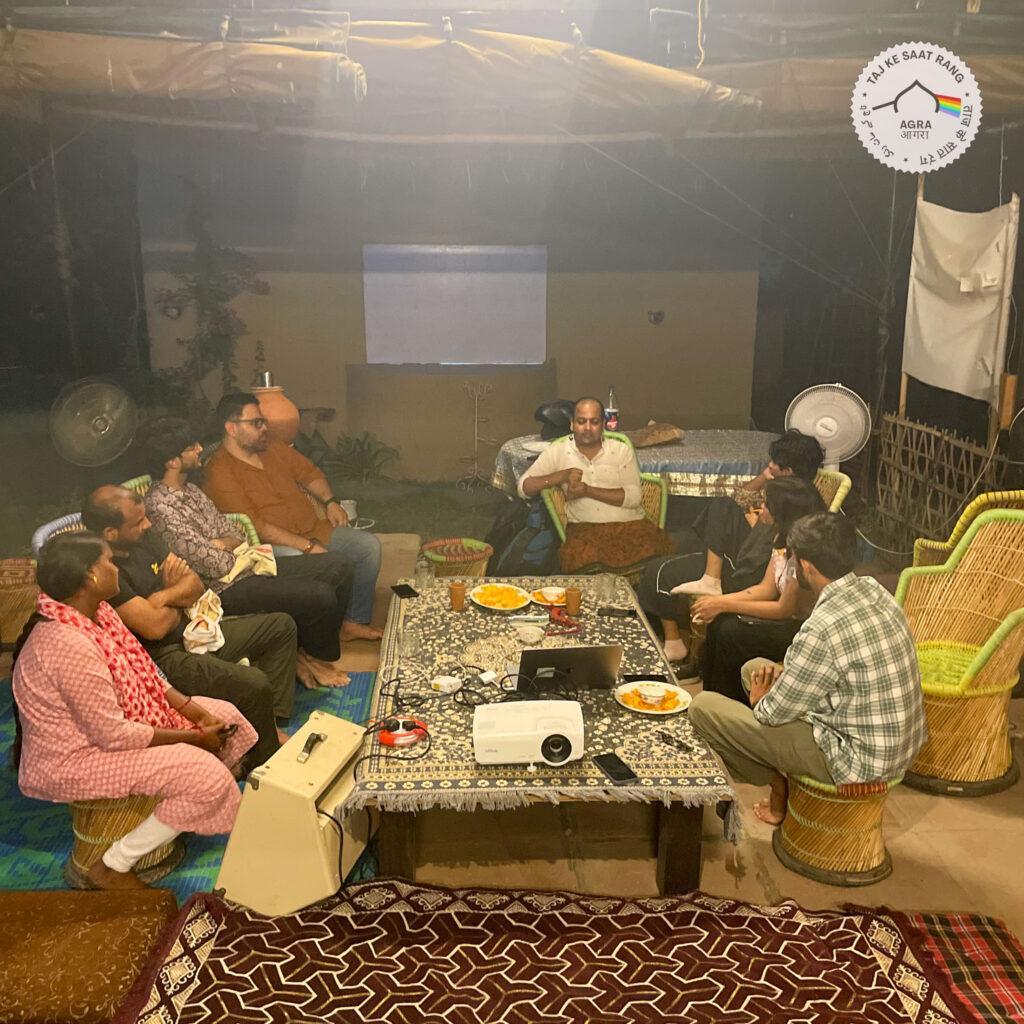 What stood out across both the talks and the screenings was a shift away from simple representation.
This was not about “showing queer stories” in a token way.
It was about creating a space where stories could unfold on their own terms.
Where complexity was not simplified.
Where discomfort was not avoided.
Where vulnerability was not rushed.
In doing so, the festival moved closer to something deeper than visibility.
It created understanding.
Holding Space in a Tier-II City
In metropolitan cities, such conversations are slowly becoming more accessible.
But in places like Agra, they are still rare.
To sit in a room and openly engage with questions of identity, belonging, and queerness—without fear of judgment—is not a small thing.
It is a shift.
The talks and screenings at Taj ke Saat Rang became a safe, inclusive cultural space where people could encounter these ideas for the first time—or revisit them with new perspectives.
What Stayed After
Long after the sessions ended, the conversations continued.
In small groups.
Over meals.
In quiet reflections.
Some people left with more questions than answers.
And that was the point.
Because not every experience needs resolution.
Sometimes, what matters is that space was created at all.
Building Through Conversation
As Taj ke Saat Rang grows, these moments of dialogue and reflection remain central.
Performances may draw people in.
But it is conversations that allow them to stay.
To think.
To connect.
To return.
The talks and film screenings are not separate from the festival.
They are its foundation.
Because culture is not just what we show.
It is what we talk about.
What we listen to.
And what we carry with us after.
Taj ke Saat Rang
A space for expression.
A space for reflection.
A space to listen—and be heard.