
Queer Heritage Walk at the Taj Mahal: Reclaiming Presence in India’s Most Iconic Space
How Taj ke Saat Rang Brought Queer Stories into the Heart of Agra’s Heritage
What does it mean to be queer at the Taj Mahal?
/established/media/media_files/2025/07/18/lgbtq-india-queer-visibility-india-queer-community-in-small-towns-india-2025-07-18-17-58-08.webp)
A monument that has come to symbolise love—globally, romantically, and almost exclusively in one form.
Last year, as part of Taj ke Saat Rang, we explored this question not through theory, but through presence.
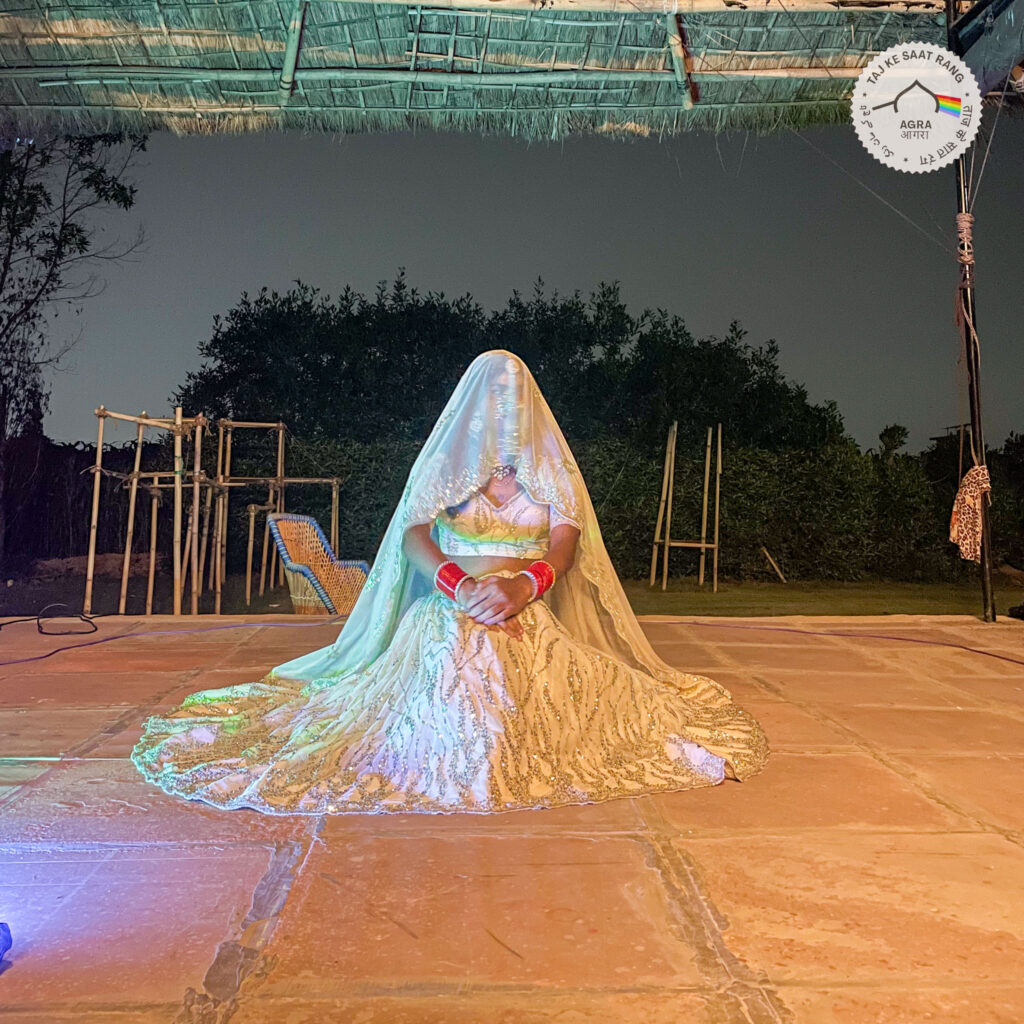
We walked into the Taj Mahal with drag artists, performers, and participants—not to disrupt loudly, but to exist meaningfully.
Queering the Taj: Presence as Performance
The Queer Heritage Walk at the Taj Mahal was not a conventional walk.
It was an experience.
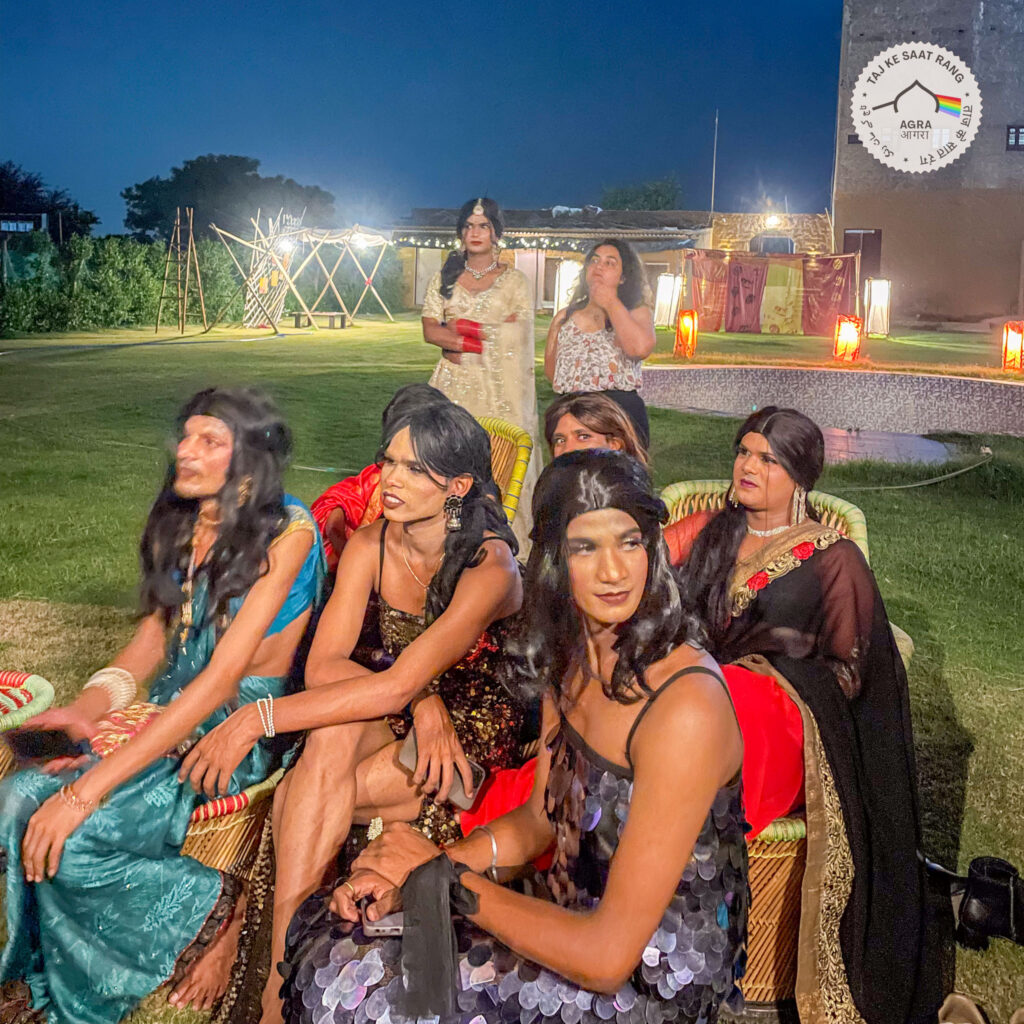
Drag artists Hiten and Dusky from Delhi, along with Naina from Agra, became part of this space—not as spectacle, but as storytellers through their presence. Within the monument, they performed, moved, and inhabited the space while being filmed—creating a visual and emotional narrative that quietly questioned:
Who gets to be seen in places that define love?
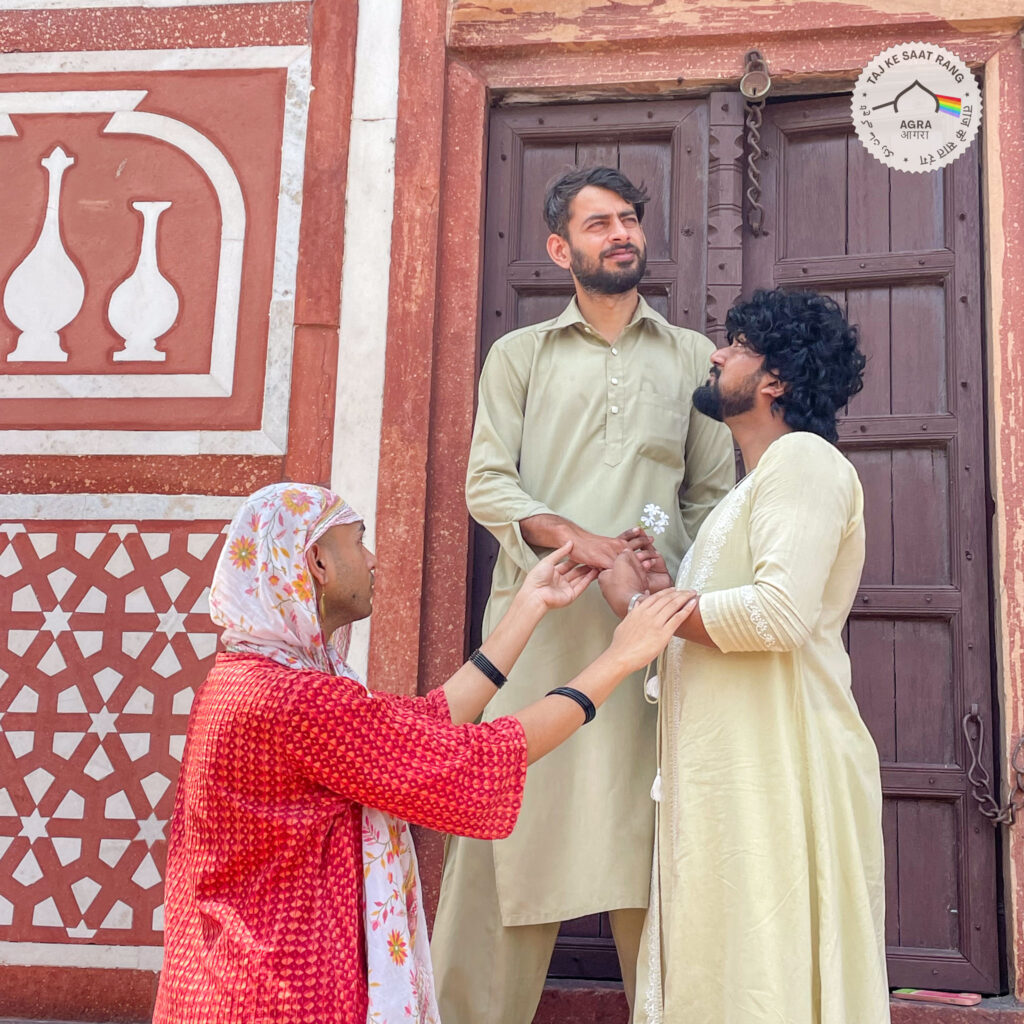
There were no stages. No announcements.
Just bodies, identities, and expressions existing within one of the most photographed monuments in the world.
And that was enough to shift something.
Because when queer individuals occupy such spaces, even gently, it begins to challenge the idea that these monuments belong to only one kind of love story.
Beyond the Monument: The Queer Heritage Walk
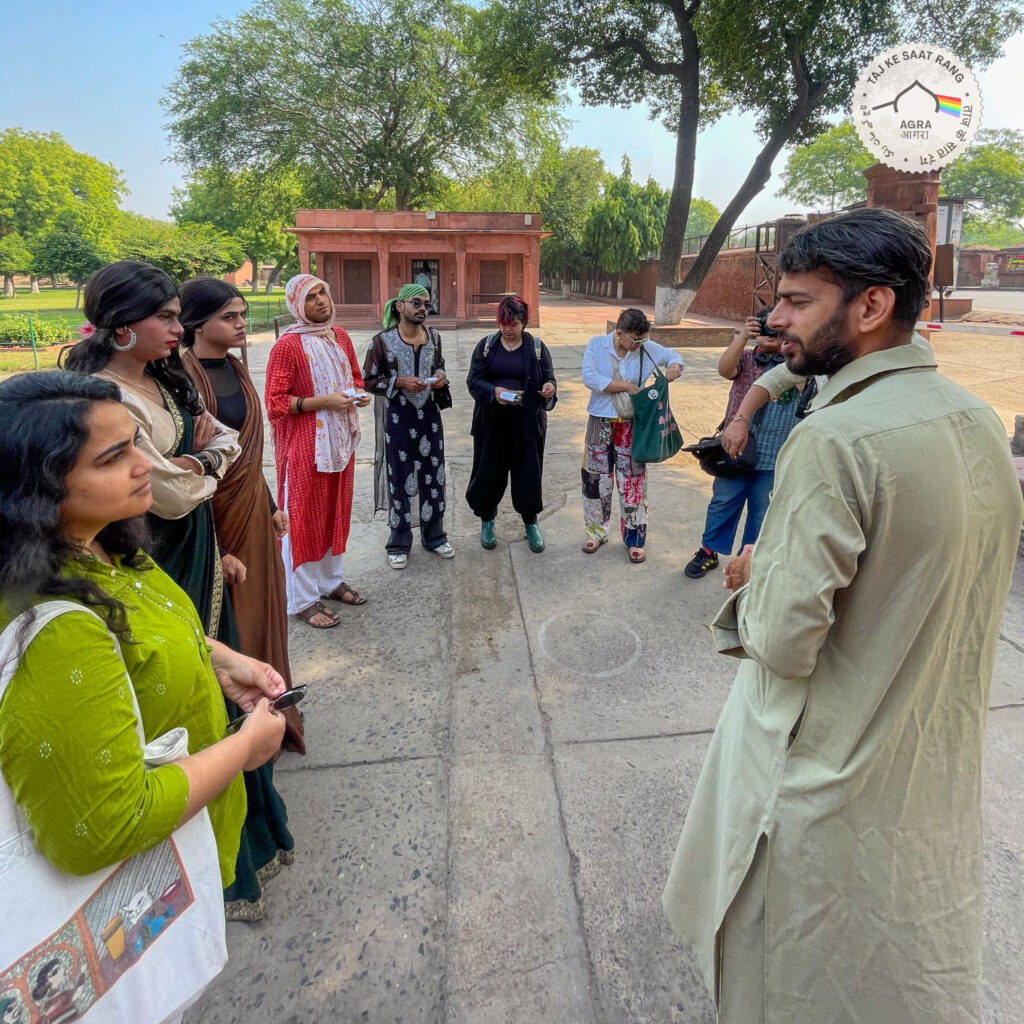
Alongside this, we curated a separate Queer Heritage Walk in Agra, designed to go deeper into history, culture, and narrative.
This walk moved beyond performance into dialogue.
Here, we explored the historical presence of queerness in the Indian subcontinent—what we call the land of Hindustan—not as a modern import, but as something that has always existed within its cultural fabric.
We spoke about:
– Sakhi culture, where emotional and intimate bonds between women found space within social and devotional contexts
– Mughal-era queerness, where courtly life, poetry, aesthetics, and relationships often existed beyond rigid binaries
– The ways in which queerness has historically been expressed through art, literature, music, and everyday life
These conversations reframed queerness—not as something new or external—but as something deeply rooted in our own histories.
Rewriting Cultural Memory
One of the most powerful realisations during the walk was this:
Queer histories have not been absent.
They have been unacknowledged.
Mainstream narratives of Indian history—especially those tied to monuments and heritage—have largely excluded these stories. Over time, this has shaped how we understand culture, identity, and belonging.
The Queer Heritage Walk attempts to gently rewrite this memory.
Not by replacing existing narratives, but by expanding them.
By making space for stories that were always there.
A Different Way of Experiencing Agra
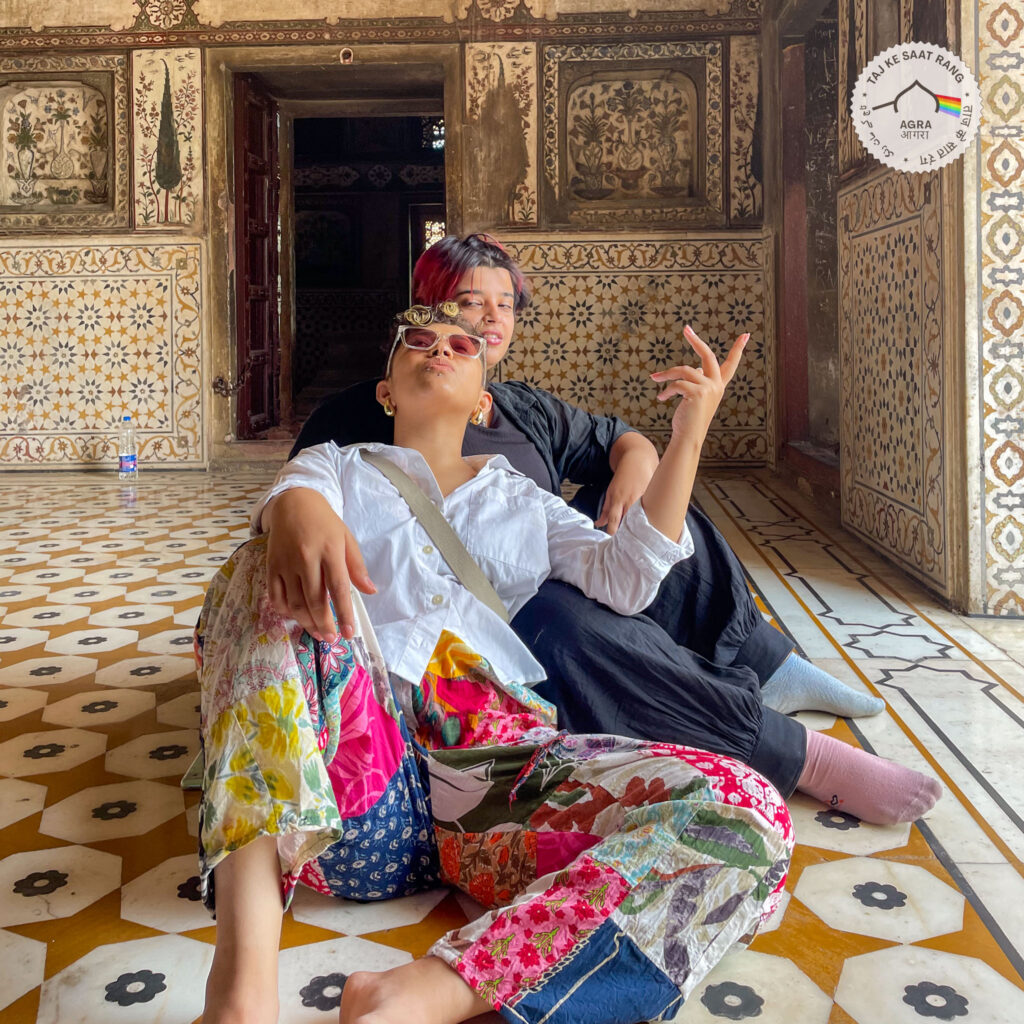
For many participants, the walk transformed how they experienced the city.
Agra was no longer just a destination for monuments.
It became a space of layered identities, hidden histories, and lived experiences.
This approach also redefines cultural tourism in Agra.
Instead of simply viewing heritage, participants engage with it. They question it. They connect with it.
The experience becomes slower, more immersive, and more personal.
From History to the Present
What made the walk especially meaningful was the connection between past and present.
The historical narratives we discussed—sakhi culture, Mughal aesthetics, expressions of fluid identity—did not feel distant.
They felt continuous.
They echoed in the performances at the Taj.
In the presence of the artists.
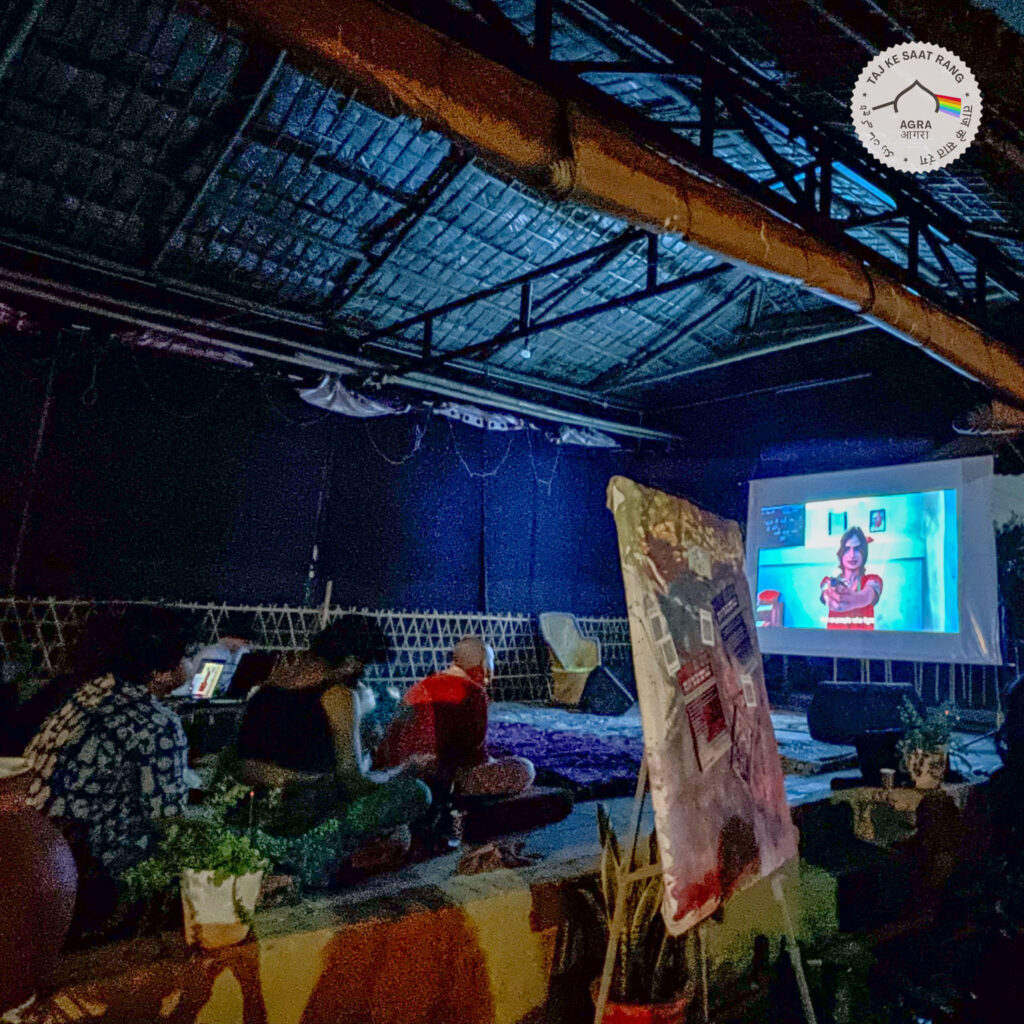
In the conversations that followed at Kala Kutir.
The past and present were not separate timelines.
They were in dialogue.
Why This Matters
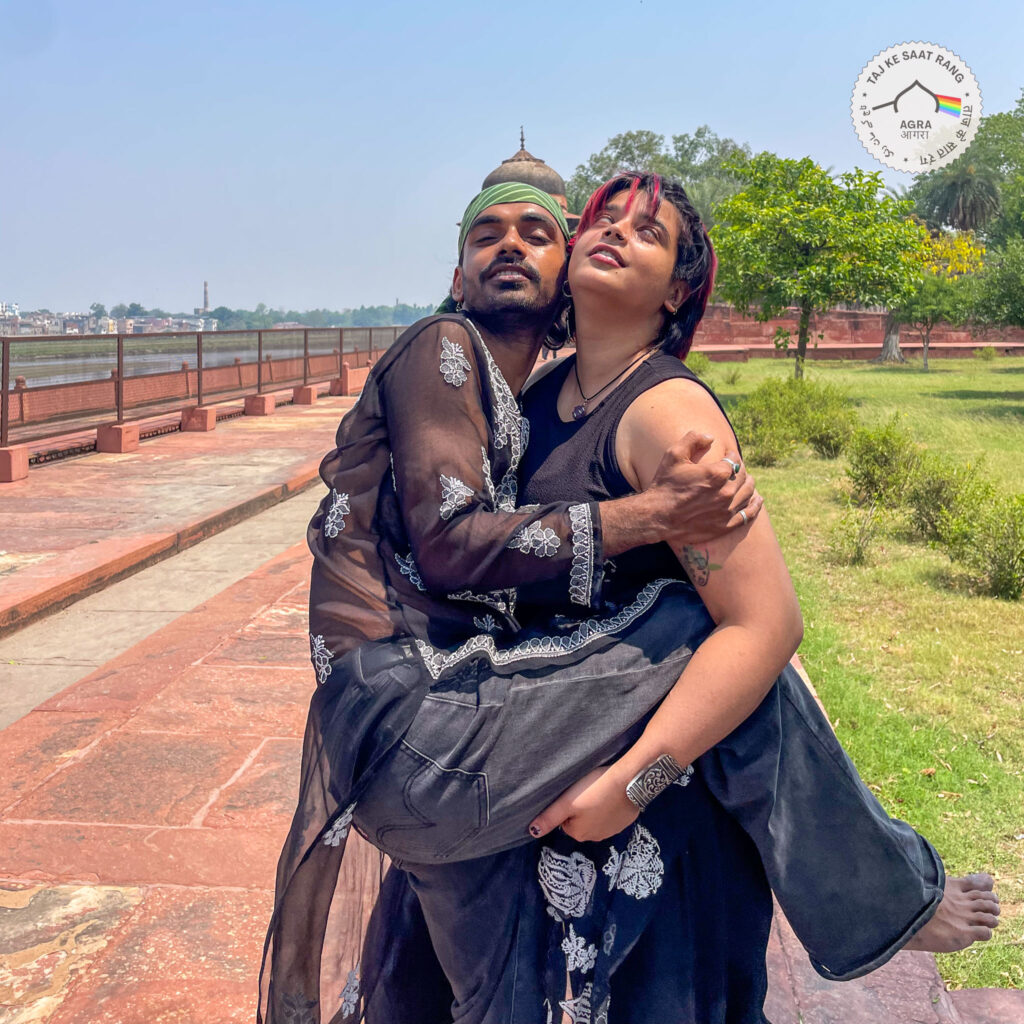
In a country where queer visibility is still uneven—especially in tier-II cities—these acts of reclaiming space are significant.
To walk into the Taj Mahal as a queer person.
To perform, to exist, to be documented.
To speak about queer histories in the same breath as heritage.
These are not just cultural activities.
They are acts of belonging.
The Queer Heritage Walk is not just about history.
It is about expanding who feels included within it.
Reimagining the Taj, Reimagining the City
The Taj Mahal will always be a monument to love.
But perhaps it does not have to represent only one kind.
Perhaps it can hold many.
The Queer Heritage Walk at Taj ke Saat Rang is a small step in that direction.
A step towards a future where heritage is more inclusive.
Where cities hold more stories.
Where presence itself becomes a form of expression.
Because sometimes, the most powerful change does not come from rewriting history.
It comes from walking into it—and being seen.
Taj ke Saat Rang — Queer Heritage Walk, Agra
Reclaiming space. Rewriting presence. Expanding belonging.